A következő címkéjű bejegyzések mutatása: conference. Összes bejegyzés megjelenítése

2022. szeptember 26., hétfő

AGI IN TRIESTE


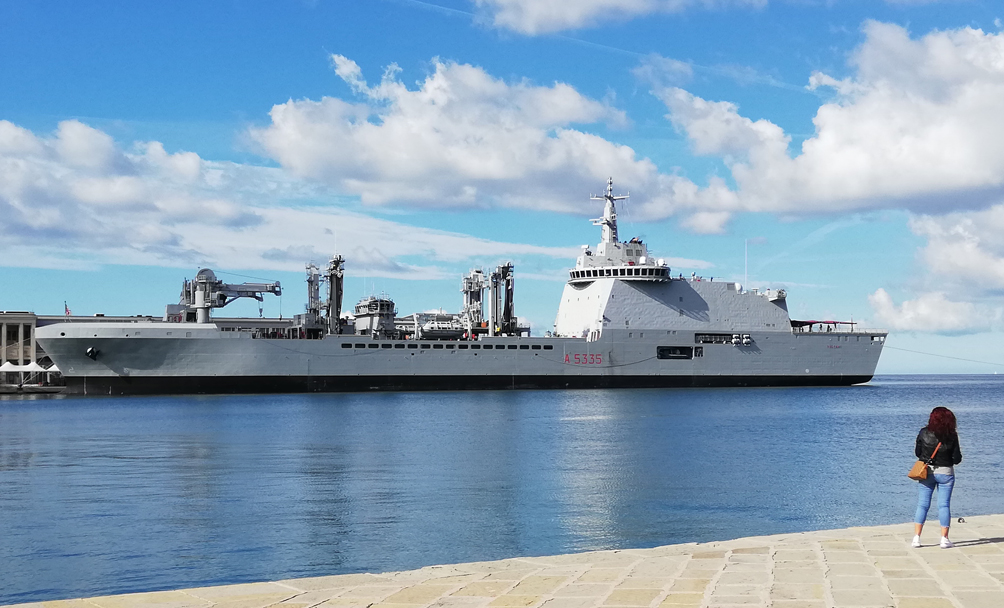
The AGI (Alliance Graphique Internationale) congress took place in Trieste between September 18 and 23. It had never been so close to us before, and it had missed two years due to the pandemic, so with Dóra we drove to Trieste in our new car. Once we were there, we visited Miramare, Duino and, of course, we went down to Venice. Thanks to Henning Wagenbreth for the last photo.


2012. november 19., hétfő

SYMPOSIUM AND SHOW IN ISTANBUL

22nd of November: “The Future of Graphic Design” International symposium organized by Doğuş University, Faculty of Arts and Design.
The first session will start at 10:00 with the participation of Sergio Olivotti, Tevfik Fikret Uçar and Esen Karol. Second session will start at 13.30, the participants are Laze Tripkov, Ayşegül İzer and Haluk Erkmen. Third session will start at 15:45 with Istvan Orosz, Engin Kafadar, Görbüz Dogan Eksioglu and Nazan Erkmen.
The exhibition of Istvan Orosz will be opened at 17.00 in H Block entrance, and the exhibition of Sergio Olivotti will be opened at 18:00 in K BLock entrance. The exhibitions are opened till 22nd of December.
Address: Doğuş University, Gözaçan Kültür ve Sanat Merkezi, Acıbadem, Kadıköy, 34722 İstanbul

http://prizma.dogus.edu.tr/?p=5510

2012. március 9., péntek

ANIMISMUS

Exhibition Animism Haus der Kulturen der Welt, Berlin - (15.03.-06.05)  The exhibition’s starting point is the artistic-aesthetic process of animation, best known from cartoons and animation films, and examines its relationship with the categorial definitions and limits of the modern world-view.
Participating artists include Adam Avikainen, Marcel Broodthaers, Didier Demorcy, Walt Disney, Jimmie Durham, León Ferrari, J.J. Grandville, Victor Grippo, Candida Höfer, Tom Holert, Ken Jacobs, Yayoi Kusama, Lars Laumann, Len Lye, Daria Martin, Angela Melitopoulos und Maurizio Lazzarato, Vincent Monnikendam, Istvan Orosz, Roee Rosen, Dierk Schmidt, Erik Steinbrecher, Paulo Tavares, Rosemarie Trockel, Martin Zillinger e.a.

An other animation related event in Germany: the 19th Stuttgart International Festival of Animated Film starts at 8th of May. Hungary is the guest of the festival, among others you can see Mind the Steps! (1989) and Chess! (2011).

A Brief Overview of Golden Age Hungarian Animation

Although you can find such well-known personalities as John Halas or George Pal at the beginning of Hungarian animation history between the two world wars, permanent animated film production was reinstituted by a few animators who stayed in Hungary during the postwar period. Most importantly it was Gyula Macskássy, a former colleague of John Halas, who assisted the foundation of the stateowned Pannónia Filmstudio in 1951, which, being one of the leading animation studios of the world until the change of regime in 1989, became the very base of Hungarian animation. Following the production of stereotypical children films and folktales during the highly centralized 50s, two shorts, Pencil and India Rubber and Duel by Macskássy and the cartoonist György Várnai, brought a break-through for Hungarian animation on an international scale in early 60s. From then onward, along with popular cartoon series for children purchased by the Hungarian National Television, special attention was given to short animations made primarily for a grown-up audience. These shorts, compared to the rigid political control of live action films, were centrally less censored as a matter of show of political liberty to the international arena at filmfestivals abroad. Also, because of the relative autonomy gained by the economic reforms in 1968, the production of animated family features were launched starting with Johnny Corncob in 1973, and followed by other adaptations of Hungarian literary classics and mythology, such as “Matt the Gooseboy” (1979) by Attila Dargay, “Son of the White Mare” (1981) by Marcell Jankovics, “Heroic Times” (1983) by József Gémes, and by such popular animated features as “Cat City” (1986), an animal parody of Hollywood spy films by Béla Ternovszky. This rich period between the 60s the 80s is usually referred to as the golden age of Hungarian animation. The new wave of short animations emerging in the 60s could effectively grasp the multilayered concerns of human existence. Largely influenced by twist-oriented caricatures. These absurd, satirical depictions of everyday situations can be hallmarked with shorts such as “Concertissimo” by József Gémes, “Moto perpetuo” by Béla Vajda or “Scenes with Beans” by Ottó Foky. Some directors choose to depict more universal themes of human existence and its purpose without having a direct (or rather indirect) reference to the current social-political situation. “Sisyphus”, an Oscarnominated short film by Marcell Jankovics, who is one of the leading animation directors until today, gives a truly original twist to the ancient myth of human endeavour. In “The Fly”, the Oscarwinning short movie by Ferenc Rofusz, the viewer has to identify with the distorted perspective of a small bug who is trapped in a house for good. The social-political dissonances and, as a result, the lack of perspective as a common generational experience of the age was reflected in allegoric ways by several animations from the 70s onward (“Hey, You!”by Péter Szoboszlay, “Mind the Steps!” by István Orosz). Truly the most individual authors of this period, starting their careers in the 60s, were György Kovásznai and Sándor Reisenbüchler. Kovásznai’s oeuvre was mainly based on expressive stop motion painted animations, and grasps the mood of his generation in a very unique way. Reisenbüchler, a dedicated hippie throughout his lifetime, made cutout collage short films, each being a harsh criticism of civilization and drawing attention to the universal social, ecological problems of humanity (“Farewell, Little Island!”, 1987). The following film overview of the Hungarian animation surely provides you with a lively and impressive depiction of the socialist era over the Iron Curtain while the relevance and validity of the very best of Hungarian animation short film history have not become outdated during the past decades.
(From the official site of the festival written by Anna Ida Orosz, animation film historian)


2011. április 23., szombat

ANKARA

1st Symposium of Art and Design Education: "Dün-Bogün-Gelecek" = "Past-Present-Future". Interdisciplinary seminar and international workshop in Ankara at the Fine Arts Faculty of Başkent Üniversitesi from 22nd till 29th of April.
The teachers: Ali Herischi, Andreas Treske, Erdağ Aksel, Genco Gülan, Hüsamettin Koçan, Istvan Orosz, Reha Benderlioğlu, Reza Abedini, Serhat Kiraz.
And my students: Azadeh Ghaeini, Baran Çağınlı, Barış Hasırcı, Ceyda Elçi, Doruk Yurtoğlu, Emin Görkem Ayan, Esma Sencan, Fatih Sazak, Selen Kılınç, Tuba Mücella Kiper.

2010. július 24., szombat

BRIDGES AND LIGHT SYMPOSIUM IN PÉCS

The Bridges Conferences, running annually since 1998, brings together practicing mathematicians, scientists, artists, educators, musicians, writers, computer scientists, sculptors, dancers, weavers, and model builders in a lively atmosphere of exchange and mutual encouragement. Important components of these conferences, in addition to formal presentations, are hands-on workshops, gallery displays of visual art, working sessions with artists who are crossing the mathematics-arts boundaries, and musical/theatrical events in the evenings. In this year the Bridges Conference will be held in Pécs, the Cultural Capital of Europe between 24 and 28 of July. My lecture will be on Monday 11:45 AM. Title: „Art with a Double Meaning - Poem and Poet from an Anamorphic Point of View” All other details are on the website of the conference.
As soon as Bridges finishes, the VIII. International Light Symposium will start. My lecture will be on Friday (30th of July) in the House of Arts (Széchényi tér 7-8) in the morning section. Title: Nothingness Depicted.

2009. november 21., szombat

2009. október 25., vasárnap

LECTURE AND SHOW IN SLOVENIA

17 – 18 November: “EMZIN Visual Communication Seminar” in Kino Siska centre for Urban Culture (Trg Prekomorskih brigad 3) in Ljubljana.
Participants: Art Chantry from USA, Finn Nygaard from Denmark, Declan Stone from Amsterdam and István Orosz from Hungary.
My 3 hours lecture will begin on Wednesday, at 2pm. In the next day will be the opening ceremony of my poster show in Galerija Avla NLB, Trg republike 2. (The previous exhibitor was Milton Glaser.) Opening on Thursday, 19 November at 8 p.m. The exhibition will be on view from 19 November 2009 to 14 January 2010. The gallery is open every workday from 8 a.m. to 6 p.m.For more information and for registration visit the website of Kino Siska.

2009. október 15., csütörtök

ISTANBUL

AGI conference in Istanbul. The theme of the conference is “Beauty of Chaos”. The organizers write: this title represents the cultural cosmopolitism of Istanbul. I live with Anna in a hotel of Istiklal Caddesi that is the main shopping street of Galatasaray district. Well, this street is the embodied Chaos itself with vivid atmosphere and 24 hours trafic jam. The conference was held in the Mimar Sinan Fine Arts University located on the European coast of Bosphorus. Some of the speakers: Jeffrey Fisher, Marian Bantjes, Nancy Skolos, Alex Jordan, Vladimir Chaika, Michel Bouvet, Stephan Bundi, Henry Steiner, Peter Till .... This photo was taken at the opening coctail of "Unplugged Faces" exhibition at Milli Reasürans Gallery.

2009. október 10., szombat

MAR DEL PLATA

"Becoming famous in South America does not make one any less unknown.” (Jorge Luis Borges) My lecture was about the relation of time and space in posers. I described them as the genre of “hic at nunc”. Posters are on the point of intersection of time and place, they are said to be the art of “here and now”. The message of a poster concerns with only one particular moment: it would be meaningless in an earlier time and would be invalid after the announced event as it does not make any sense in other places. During the lecture a collection of my works were projected where the above mentioned kind of Time-Space-Poster intersection was dominating.
I am ready to admit that some of my posters in a sense have never been real posters at all. They do not fulfil their function if we expected them to be commercial posters and they are not sufficient applied graphic works if we expected them to compliance with clients. But I would like to believe that they begin to talk if we are interested in the age, in the world that was given to us to live in, if we should like to know how ideas were coming and going among the different fields of culture, how a theatre-message was communicated by the means of visuality, how literature was written further in the language of fine arts, and how the originally subordinate idea has become independent, equal and may be personal. If these poster-graphics had message, probably they will have it too, apart from borders and periods.

A message from Fort Collins CO (US), from the Award Ceremony of the 16. Colorado International Invitational Poster Exhibition (CIIPE 2009). The winners : first prize - Uwe Loesch (Germany) for Requiem, second prize - Ralph Schraivogel for emnants of Zurich Interiors, third prize - Leonardo Sonnoli (Italy) for 15, honorable mentions: István Orosz (Hungary) for IRAN, Luba Lukova (USA) for Health Coverage, Miroslaw Adamczyk (Poland) for Maria Stuart, Melk Imboden (Switzerland) for Rivera-Kahlo, Yuri Gulitov (Russia) for Calligraphy, Francois Caspar (France) for Louise, Savas Cekis (Turkey) for War & Peace